



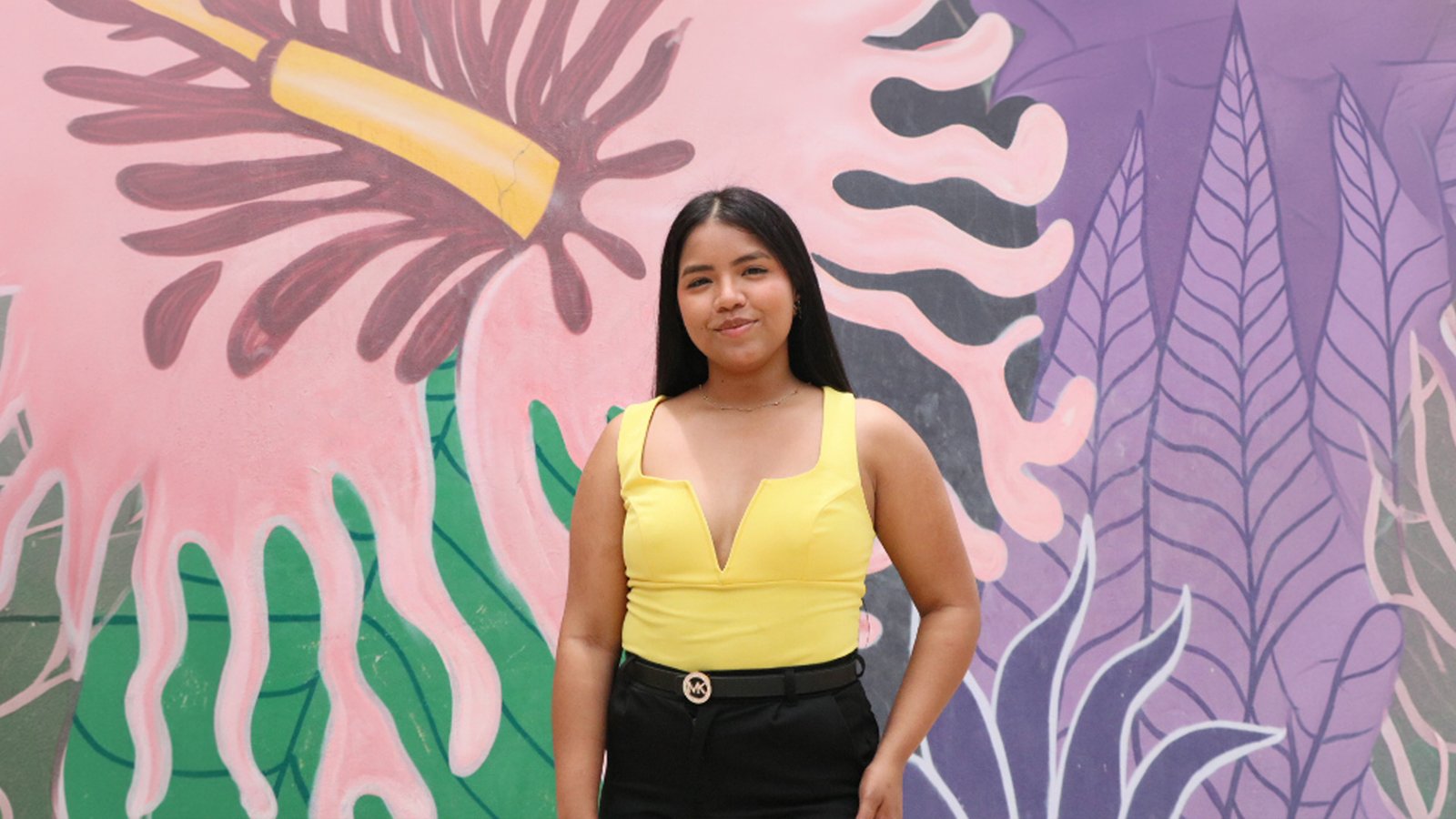
Aura Yuliza Suárez, a Guajira, an Indigenous woman, a migrant and a trainee psychologist, is a young woman whose heart is rooted in transforming the lives of girls and young women in Barranquilla.
Yuliza Suárez — or Yuli, as she prefers to be called — is a young Wayú’ Indigenous woman based in the city of Barranquilla. She is one of the women leading initiatives within the Atlántico Departmental Network of Young Women. At her age, she has experienced situations that have shaped her and led her to develop the leadership for which she is now recognised nationally.
She was born in Maicao, a border town in the department of La Guajira, into a family belonging to the Wayú Epiayú clan. When she was five years old, her family decided to settle in the state of Yaracuy, Venezuela. She spent her childhood in Venezuela with her sister, mum and dad. She looks back on those times with fondness. In 2014, when she was about to turn 11, the economic crisis and, subsequently, the migration crisis in Venezuela caught up with her whilst she was visiting her grandmother in Colombia. The borders had been closed and Colombians were not being allowed into the neighbouring country. As a result, Yuliza and her family were unable to return to their home in Yaracuy.
A few months after the borders were closed, they decided to move to Barranquilla and arrived at the family home of Mrs. Dani, her mother. After spending some time living with their aunts, uncles and cousins, they decided to move to a small house in the south-west of the city. That neighbourhood would shape the lives of not only Yuliza, but also of her family.
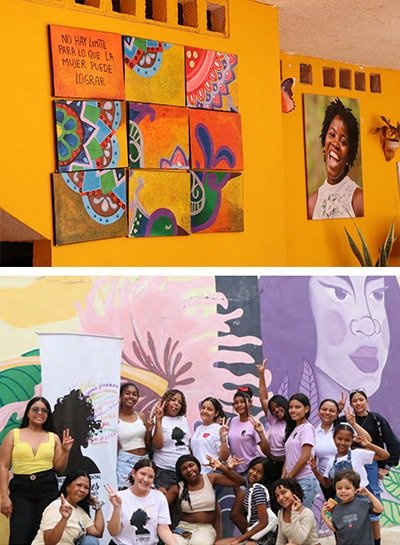
The Atlántico Departmental Network of Young Women is an organisation founded over 15 years ago as a space for girls and young women to develop their skills in leadership, political participation and the prevention of gender-based violence. They are based at the Casa de la Mujer (Women’s House) Foundation, located in the south-west of the city, in the very same neighbourhood where Yuliza and her family lived. It was through the workshops offered by the Network that Mrs. Dani began to get involved and take part in the training programmes.
“Yuli taught me to speak out,”
says Osmarly, one of the
young promoters.
The Foundation and the Network have a strategy for the upkeep and sustainability of their physical premises, which involves the integration of a caretaker family. This entails a family living on the Foundation’s premises and ensuring the upkeep of the spaces and plants, as well as providing logistical support for the activities carried out there. Thanks to the close relationship Mrs. Dani built with the people at the Network and the Foundation, combined with the financial situation she was facing, she was offered the role of caretaker family. There, Yuliza, Sailys (her sister), and Mrs. Dani lived for three years.
“What is sown in a young woman is sown for a lifetime,” says María Claudia Herrera, co-founder of the Network, recalling the impact of the processes that have taken place throughout the collective’s history. María Claudia has played a vital role in Yuliza’s life. When Yuliza and her family arrived at the Foundation as a foster family, María Claudia welcomed them with open arms and encouraged them to become part of the collective’s work and, above all, to develop their leadership skills.
“Yuliza began to ask questions, to question things, to take an interest in the issues. From that moment, we knew that something was going to start to change,” recalls María Claudia when speaking of the way in which Yuliza began to form part of that generational handover that has characterised the Network since its creation. First it was María Claudia, from the moment she co-founded the initiative and took on the challenge of driving the collective forward. Then it passed to Stefani, who represented the Network on sexual and reproductive rights and took the lead on initiatives such as the women’s advocates programme—in which Yuliza and Saylis took part. Stefani then taught Yuliza how to manage these initiatives, to handle legal matters and to compile reports. Yuliza saw Stefani as a role model, a possible path for her own life. “When I grow up, I want to be like Stefani,” Yuli said at the age of 13.
The handover from Stefani to Yuliza took just a few days, before Stefani left the country. This handover did not come as a surprise to her, as ever since she and her sister joined the Network, they had been taught that at some point they would lead these initiatives. “I feel that this is my space; I’ve made it my own since I was very young,” she says with conviction.
The affection she has for the girls is what keeps her so active in the Network. Her favourite part is seeing how the girls grow through these processes, watching them take part in the workshops and seeing how these have a positive impact on their lives.
Yuliza is currently in her fourth semester of studying psychology. Although her dream was to study sociology, her financial and employment circumstances led her to choose a different degree programme. What she has learnt is reflected in the strengthening of the Network’s programmes and in the psychosocial support she provides to girls and young women. She looks forward to her professional future with great enthusiasm.
Yuli dreams of becoming someone great, without realising that she already is, and that through her activism she has transformed the lives of many girls and young women in Barranquilla.