



CORPORACIÓN JURÍDICA YIRA CASTRO
Discover how the women of Tumaco are transforming the region through education, empathy and leadership, following in the footsteps of an unforgettable leader: Alicia.
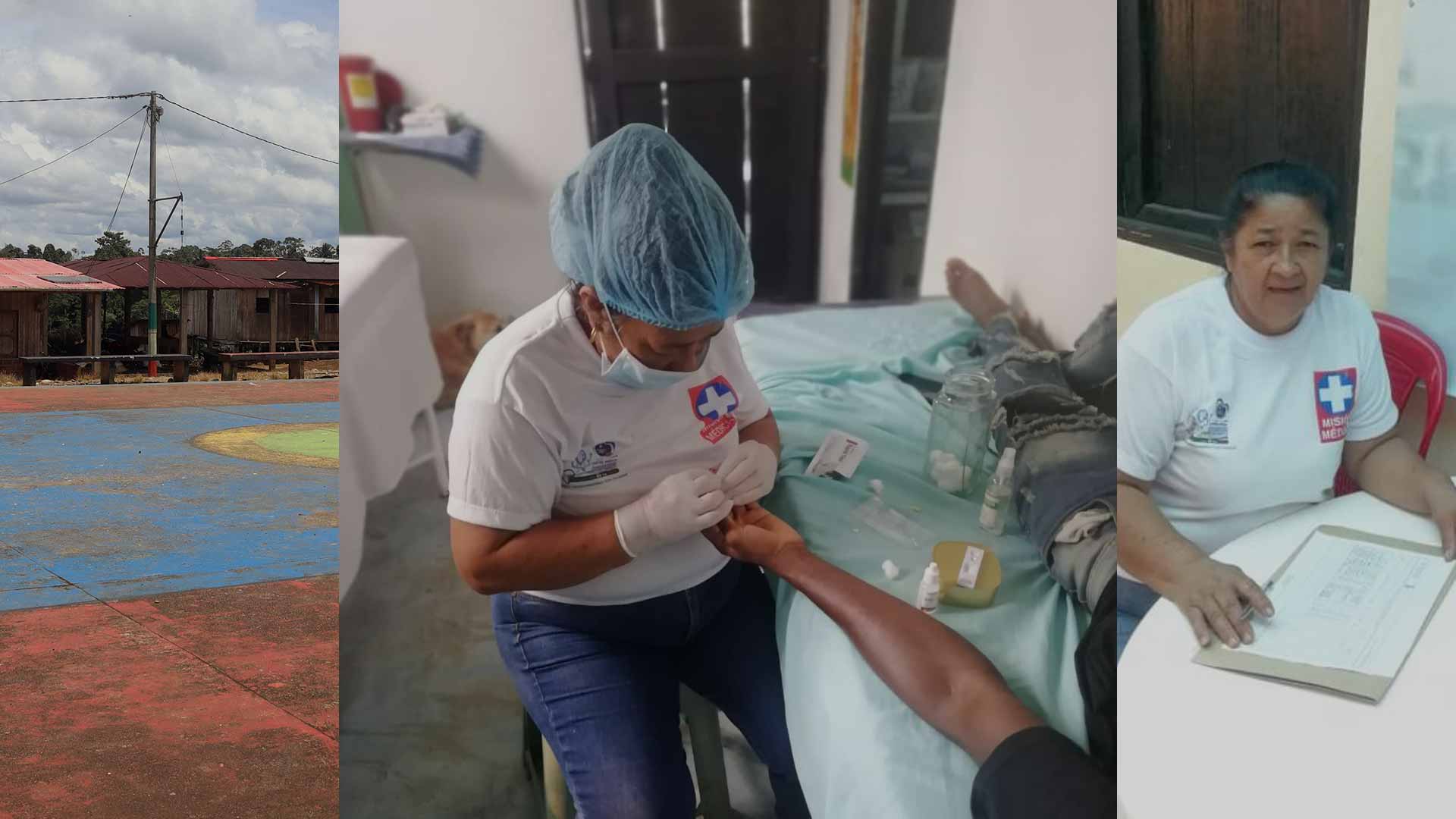
The canoe’s engine roars on the Mira River as we enter the green thicket of Tumaco. On board, with only our backpacks, the contained silence of the trip is overshadowed by the persistent hum of the engine. When we reach a small beach, we climb a dirt path to a brick shop. It’s on the first floor facing the river with a window where packets of potatoes, biscuits and rice hang. Mrs Alicia’s daughter is now the one who remains behind the counter. She greets us with a friendly smile as we climb towards Vallenato. Although Alicia is no longer with us, her presence can still be felt there. That shop was not just a business: it was a meeting place, an open doctor’s office, a space where community was woven together. Alicia died suddenly while participating in a community meeting on health issues in Tumaco. She was in the prime of her leadership, speaking for her people, demanding improvements for her territory. Until the very end, her struggle was for the collective well-being.
“They feel that we shouldn’t
have a voice or a vote…
but we know how
to organise, lead
y and be heard”.
Alicia was much more than a nurse. She was a great leader, counsellor, defender and spokesperson. She was someone who listened attentively, understood, cared and helped with many issues, including the health of the people in the area. She was a woman who, like a strong and flexible knot, united her community in the most difficult moments. Her strength and flexibility were evident in community workshops where, despite being one of the few women among male leaders, she spoke firmly and defended her village. At the same time, she was approachable and open to listening to those who came to her for support.
Because Vallenato, like other villages in Alto Mira and Frontera, has been hit hard by violence for decades. Since the 1970s, armed groups have fought for control of the territory, leaving fear, displacement and silence in their wake. In the midst of this history of conflict, women like Alicia emerged. Women who, instead of fleeing, decided to stay, resist and build from the ground up.
Being a leader in this context is not a title, it is an act of bravery and courage. In the Vallenato region, at the village school, women from different communities gather with members of Yira Castro’s team to talk about their struggles, their dreams, their wounds. They want to be heard, to participate in decision making, to break the pattern where the public voice has historically been male. Alicia opened that door and today other women are motivated to continue her legacy.
One of them tells us with conviction: “Sometimes they think that because we are women, we have no voice or vote. They interrupt us, they minimise us. But we know how to organise, lead and suggest. We have always done so, only now we are saying it out loud.”
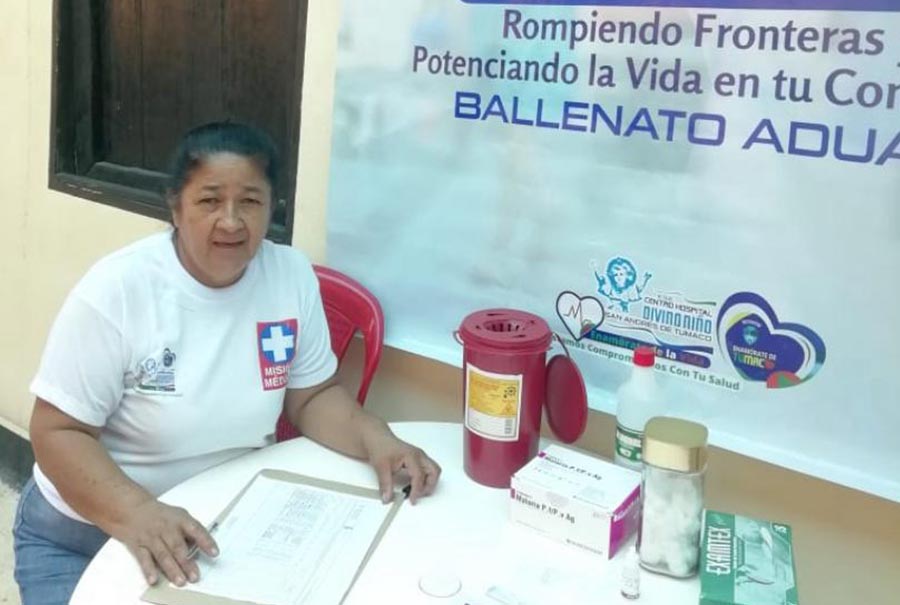
Female leadership in these territories does not shout, it summons; it does not impose, it accompanies. It is based on empathy, trust and the ability to look at others with honesty. Alicia was sought after, not only for her medical knowledge, but also because she knew how to listen and find solutions. And that legacy lives on. Many current women leaders work tirelessly to improve education. They manage teachers, talk to head teachers and demand improvements in infrastructure. They know that the school is the seed of change.
This collective spirit is also articulated in the Association of Community Action Boards of Alto Mira and Frontera (Asominuma). It is currently made up of 33 villages and it was there that Alicia became one of its most respected voices. Today, women’s voices are growing louder and women are making their mark on multiple fronts. They are making their mark as secretaries of the boards, as organisers of meetings and educational workshops, as promoters of dialogue processes, among other things.
El liderazgo femenino en estos territorios no grita, convoca; no impone, acompaña. Se basa en la empatía, en la confianza, en ese saber mirar al otro con honestidad. Alicia era buscada no solo por sus saberes médicos, sino porque sabía escuchar y buscar soluciones. Y ese legado sigue vivo. Muchas lideresas actuales trabajan incansablemente por mejorar la educación: gestionan profesores, dialogan con rectores, reclaman mejoras en infraestructura. Saben que la escuela es la semilla del cambio.
Women leaders are living knots
that unite neighbourhoods,
build community and sow peace
with empathy and education.
Women here are like knots. They unite the villages scattered along the Mira River, connect stories, confront stigmatisation and build bridges where there were once only walls. But there is still more to be done. The challenge remains to unite all women, because when women from different villages come together, their voices are amplified, their influence grows and the hope of transforming the territory is strengthened.
Women leaders are also key in peace processes, not at the big negotiating tables, but accompanying children in the school corridors, at community assemblies or queues at the health centre. They are the ones who can build bridges with armed actors and create spaces for dialogue with respect and recognition, because they know the territory, because they live there, because they feel it.
This is how Alicia’s legacy resonates!
Today, her shop is still standing. Her daughter continues to serve the customers. And in every meeting, in every effort to improve education, to unite villages, to build peace, there is a piece of her legacy. One more thread in this collective fabric that the women leaders of the territory continue to weave, stitch by stitch, knot by knot.
LINKS TO ARTICLES
Alto Mira
and Nariño border
They propose working together with the council, and they provide the guarantees… But there is a severe economic crisis in the region….
Education
in Tumaco
Access to education in areas like the 22 rural communities where the ASOMINUMA Peasant Association is present…
Tired
of war
Many women in Tumaco have built their present on a
past that remains a heavy burden, the present…