



During the past three decades, FOKUS has been active in promoting the rights of women and the LGBTQI+ community globally. We remain active, aware that many challenges still need to be addressed.
OUR BEGINNINGS
1995 is an important year for FOKUS. Not only is it the year the world gathered in Beijing to adopt a historic declaration on women’s rights and gender equality at the Fourth United Nations World Conference on Women. It is also the year the Norwegian women’s movement came together to found FOKUS, the Forum for Women and Development.
PROGRESS, CHALLENGES AND SETBACKS
This marked the beginning of a period of progress for women and girls, both in primary education and maternal health, and in the recognition of violence against them as a violation of human rights. The United Nations provided a framework for cooperation and accountability.
And yet here we are, thirty years later, facing increasing resistance not only to gender equality but to the very concept of international cooperation.
The struggle for gender equality, especially for sexual and reproductive health and rights, has become a battleground in what is sometimes called the culture war. In 2024 alone, one in four countries reported setbacks in women’s rights. Conflicts, climate crises and economic instability disproportionately affect women and girls, reinforcing existing inequalities.
The influence of anti-gender movements, which oppose the rights of women and LGBTQI+ people, is being felt around the world. These actors actively oppose inclusion policies, among many others, and attack civil society organisations and minority rights.
1995 is an important year…
it is the year when the
Norwegian women’s movement
came together to found FOKUS,
the Forum for Women and Development..
The scope of global peace is increasingly being called into question with old and new scenarios of war, such as the genocide of the Palestinian people by the State of Israel, the expansion of this conflict in the Middle East, Russia’s invasion of Ukraine and a war that has now lasted more than three years, the reactivation of armed actors linked to the international drug trafficking chain who recycle old conflicts and control territories and populations in several Latin American countries, among others. Likewise, the increasingly explicit weakness of the United Nations system to intervene clearly in stopping wars that claim human lives everywhere is becoming apparent.
The evolution is not linear. It is a matter of advances and setbacks, and new advances. The achievements of the last thirty years must be defended – and expanded – if we are to realise the vision established in Beijing. In the face of crisis, whether it be a war, a pandemic or a natural disaster, women continue to be disproportionately affected, through job losses, increased care burdens and greater exposure to gender-based violence.
CURRENT CONTEXT
FOKUS was founded in a time of idealism and solidarity. Thirty years later, a significant change is taking place: international development cooperation and international aid are in decline. This is mainly, but not exclusively, due to cuts by the Trump administration. We view with concern the results of the recent UN Women global survey1, which, based on a sample of 411 women’s organisations working in 44 humanitarian and crisis contexts, found that the programmes most affected are those addressing gender-based violence and protection, among others.
OUR COMMITMENTS TODAY
FOKUS remains active in its cooperation with organisations in the global South, supporting women’s organisations and the LGBTQI+ population committed to structural changes that dignify the human condition.
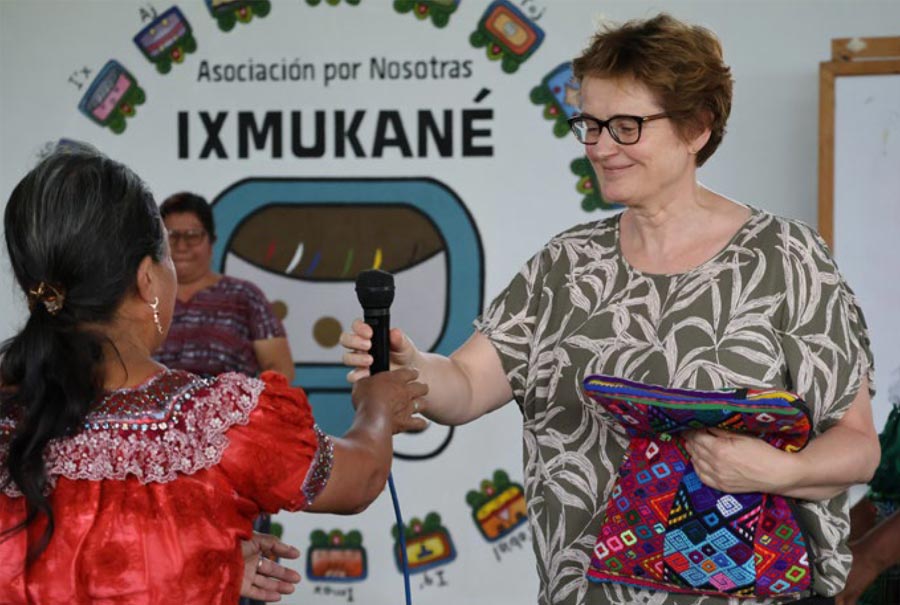
Since 2010, we have had an office in Colombia, which in 2023 became the regional office for Latin America, with small teams in Colombia and Guatemala supporting our partner organisations. .
Since 2024, we have also been building a team in East Africa to support partner organisations in Ethiopia, the Republic of Somaliland, Kenya, Tanzania, Uganda and Malawi.
In general terms, we develop four programmes in line with our strategic guidelines; however, not all of them are present on both continents. Below is a brief overview of each of them.
The programme for the Prevention of Violence against Women, Young People and Girls in Latin America, in both Colombia and Guatemala, is aimed at training, prevention and advocacy processes at a municipal and national level. These enable the prevention of the different types of violence faced by this population group, some of whom are affected by migration or by sexual, psychological and economic violence, among other things. It is worth highlighting the importance of the healing processes that have allowed for an approach based on the worldviews of indigenous peoples, as well as the individual and collective work with young women and girls, some of whom have been affected by the armed conflicts that both countries have experienced. In Africa, specifically in Kenya and Tanzania, the programme focuses, among other things, on the eradication of female genital mutilation and child and forced marriages, as well as the prevention of sexual and gender-based violence. Female genital mutilation as a rite of passage for girls into adulthood is considered to create fertile ground for early and forced marriage of girls. These are deeply rooted practices that compel compliance or, otherwise, punitive sanctions.
The scope of global peace
is increasingly being called
into question with old and
new scenarios of war.
The Sexual and Reproductive Health and Rights programme in Latin America has different approaches in Colombia and Guatemala. While in the former there is a legislation that decriminalises abortion up to the 24th week and maintains four grounds for the following weeks, in Guatemala it is prohibited, except when the mother’s life is at risk. This, in turn, has an impact on the projects developed by our partners in terms of the possibilities for advocacy as well as for training and educational processes in sexual and reproductive health. Guatemala also restricts the possibility of comprehensive sexual health education in educational establishments. In both countries, the partners develop training processes aimed at women and young people, with the aim of reducing teenage pregnancy, among other objectives. In Africa, specifically in Ethiopia, Malawi, the Republic of Somaliland and Uganda, the partners focus on overcoming attitudes and practices that limit women’s and girls’ access to these rights, based on the premise that training and dissemination of information on rights-related issues will increase demand and access to sexual and reproductive health for women and young people.
In Uganda, the economic empowerment programme aims to contribute to overcome structural discrimination and inequalities that highlight women’s economic disadvantages and impact their well-being and that of their families. This programme supports women’s access to capital, entrepreneurship and factors of production, including technology and machinery, legal registration of businesses and their protection.
The Women, Peace and Security programme, developed in Latin America, specifically in Colombia, aims to contribute to the construction and consolidation of peace, despite the many factors that continue to fuel war. The partner organisations continue to work on promoting a culture of peace, advocating for the implementation of the Peace Agreement, demanding dialogues that contribute to total peace, and creating spaces within civil society that continue to urge armed actors to follow the path of dialogue and political negotiation with the active participation of women’s organisations and communities.
We have recently begun working with Ukrainian women’s organisations with the aim of ensuring that the country’s recovery processes include gender issues as a key pillar. The experience gained with the 1325 programme in Colombia has been relevant in this regard.
Since 2024, we have had a team working
in East Africa, supporting partner
organisations in Ethiopia, the Republic
of Somaliland, Kenya, Tanzania,
Uganda and Malawi.
The journey from Beijing to today is neither a linear success story nor a story of setbacks. The world has witnessed remarkable, albeit fragile and uneven progress. Extreme poverty rates had declined, but with the COVID-19 pandemic they rose again. A considerable number of legislative reforms against gender discrimination have been passed and there are more women in leadership positions. Women’s organisations have increasingly been involved in peace processes.
The global feminist movement must continue to lobby for the realisation of human rights of women and the LGBTQI+ population, and for the dignity of human life.
Let us protect what we have achieved and continue to move forward!
- At a breaking point: the impact of foreign aid cuts on women’s organisations in humanitarian crises worldwide. UN WOMEN, April 2025. https://www.unwomen.org/ en/digital-library/publications/2025/05/ at-a-breaking-point-the-impact-of-foreign- aid-cuts-on-womens-organizations-in- humanitarian-crises-worldwide.