



CENTRO DE PROMOCIÓN Y CULTURA (CPC)
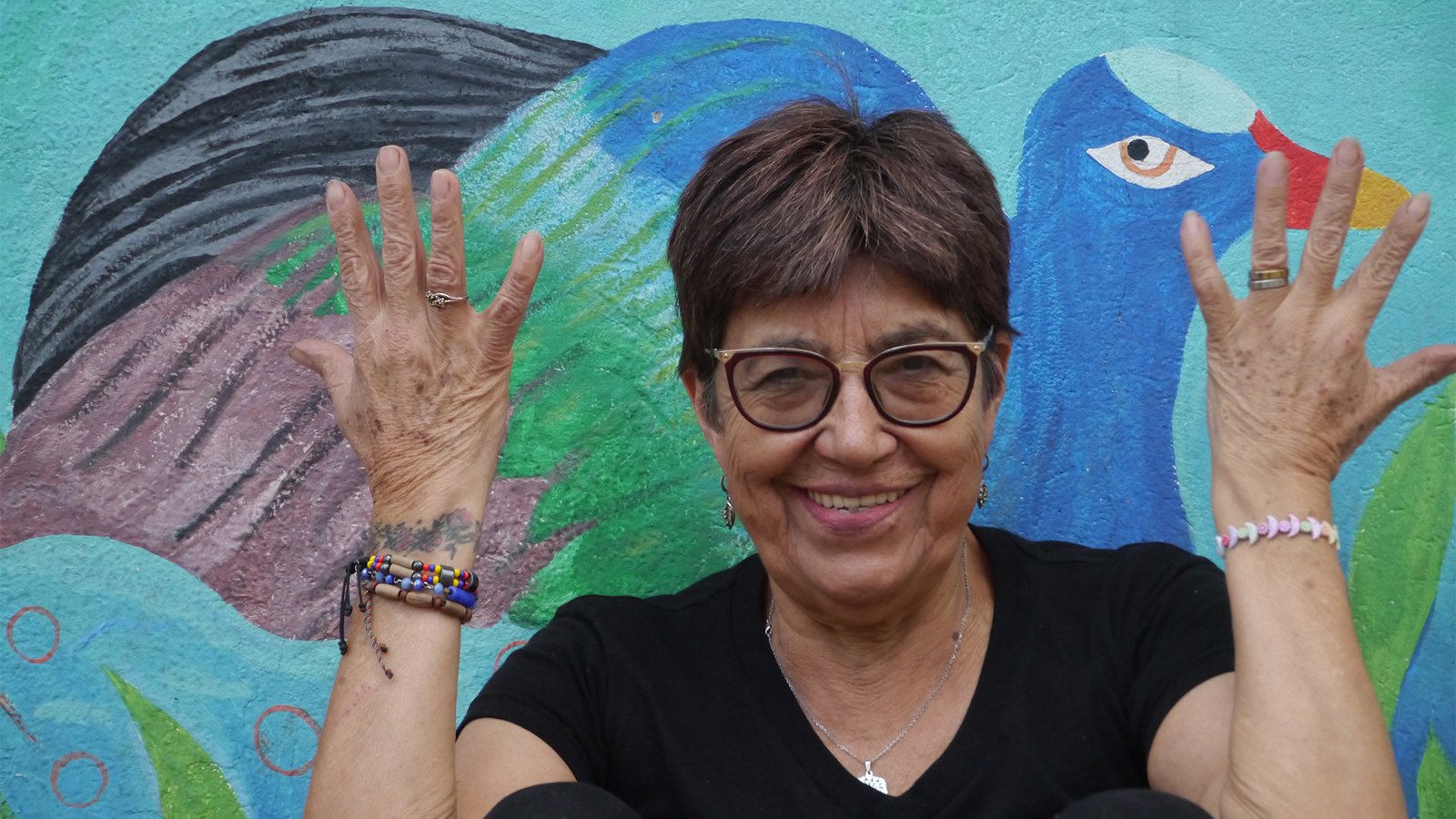
From rural woman and victim of violence to grassroots leader, the story of María de Jesús Cárdenas reveals how social organisations transform lives and build peace from the ground up.
María de Jesús was born into a farming family in Boyacá. She grew up amongst the mountains and farm work, in a home marked by machismo and submission. There she learnt the first lessons that would shape her life: that women must obey, care for others and stay put. Decades later, she would come to realise that these were precisely the ideas she had to unlearn.
Fifty years ago, she arrived in Bogotá in search of a better quality of life. She completed her A-levels, started working and started a family. She had a daughter and, years later, two more children. But the relationships with her partners were marked by violence.
There can be no peace
in a country that
continues to demand
that women endure
abuse in silence.
The violence wasn’t just a single blow. It was the constant control over her life. She couldn’t go out alone or attend family gatherings. She would barely go to the market and would rush straight back home. When she got a job, her partner went to the company and managed to get her sacked. He needed to keep her close by, under his watch and dependent on him.
There were also the voices of other women: her mother, her grandmother, the neighbours. They repeated an idea passed down through generations: ‘If you chose to be so-and-so’s wife, you’ll just have to put up with it.’ Put up with the infidelities, the shouting and the abuse. As if women’s lives had been designed solely to endure pain.
But something inside María de Jesús resisted.
When she arrived in the El Amparo neighbourhood and managed to build a home with her family, she came across the Centro de Promoción y Cultura (CPC). She attended the women’s groups because she needed a place to talk and be listened to.
There she discovered something that the violence had hidden from her for years: she knew how to lead. She could bring people together and stand at the head of a group. She then remembered her father, a well-known leader in the village where she grew up in Boyacá. Those abilities had never disappeared; they had simply remained buried beneath years of silence and fear.
Little by little, she took on small responsibilities within the organisation. Her partner began to realise that she was changing and that it would no longer be so easy to keep her subjugated.
Escaping the violence did not happen overnight. There were failed attempts. She left and then returned due to financial difficulties, since she had young children. But the changes had already begun. With the first workshops on rights, and the support of her eldest daughter, she made the final decision to leave.
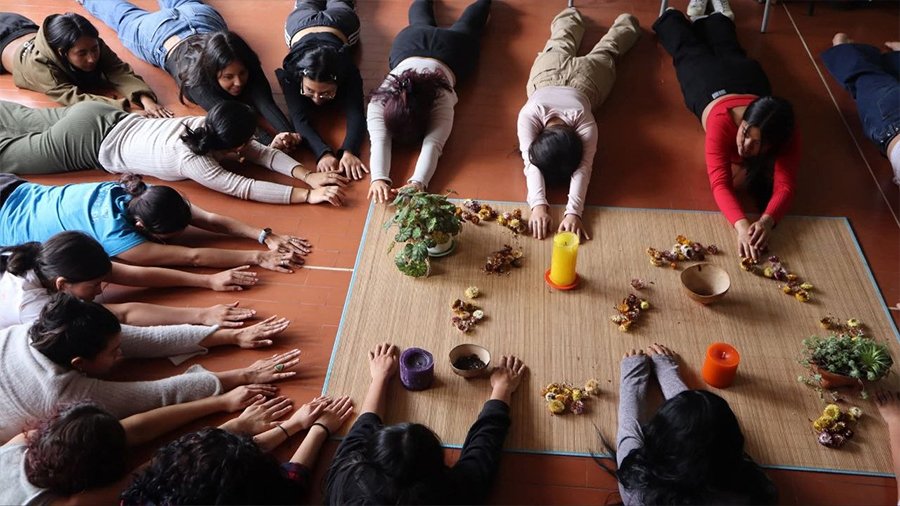
Through care and trust, women today are weaving peace.
She then embarked on a new journey of learning: about rights, participation and politics. She completed postgraduate courses at universities, studied human rights and peace, and prepared herself to support other women who, like her, were arriving in Bogotá bearing stories of violence and displacement.
Over time, she became a leader. She has served as an advisory councillor for the Right to a Life Free from Sociopolitical Violence; she has been involved at local and district levels, and remains an active leader in the Kennedy locality.
But the position was never the most important thing. What mattered most was realising that being a woman was not just about cooking, cleaning and looking after others. Being a woman meant studying, making decisions, getting involved and living with dignity.
That is why she insists that social organisations pave the way for women to recognise one another, support one another and discover new possibilities for their lives. They are the place where women realise, they are not alone, that others have also been mistreated, and that it is possible to build different ways of life.
It was there that María de Jesús came to understand that peace was not a word reserved for national agreements. Peace was also a part of everyday life: living free from violence, reclaiming one’s voice and coming together with other women to think collectively about how to live in the neighbourhood, the city and the country.
Women’s social organisations
are the place where women
discover that they are
not alone and that it is
possible to build alternative
ways of life.
At the CPC, the defence of women’s rights and peace-building are inseparable. Every confidential conversation, every training session and every exercise in participation is a commitment to dismantling the forms of violence learnt at home and in society.
Perhaps that is why María de Jesús speaks of the organisation with the certainty of someone who has seen what happens when people find a place where they are listened to and supported. In these spaces, many women no longer face violence alone. They build bonds with others and, little by little, regain the confidence to participate, organise themselves and make decisions about their own lives.
The woman who once sneaked out of her home to meet other women ended up dedicating her life to opening that very same door for many others. She knows, from her own experience, that peace also has a woman’s face and that, very often, it begins in a small community gathering where someone, for the first time, feels free, discovers that she is not alone and realises that her life can also transform the lives of others. That is, perhaps, the deepest power of social organisations: enabling people to reconnect with one another, to believe in community life and to build peace from the ground up.