



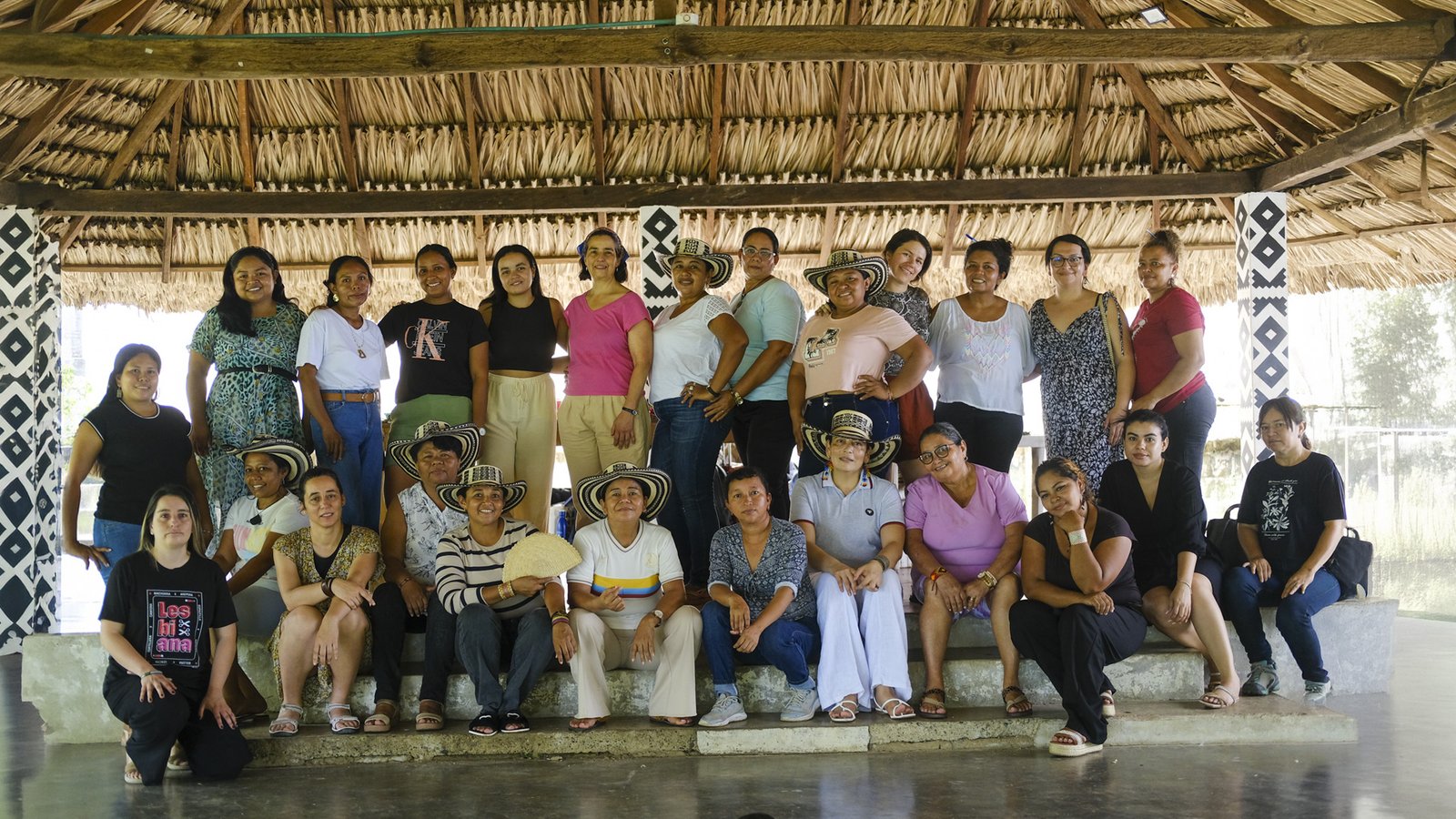
Yusleida Pineda tells us how the process initiated by Humanas with Zenú women has been a key pillar in the emergence of women’s leadership and peacebuilding.
Luz Piedad: What has it meant to you to be part of the committees monitoring the gender measures of the Peace Agreement?
Yusleida: Well, ever since I started taking part in the peace workshops, I began to learn about the Agreement, because it has to be said that, although I’m an indigenous woman, I didn’t know the Peace Agreement very well, let alone the ethnic chapter.
Once I was able to engage with it, learn about it and read it, I was able, as a Zenú woman, to take ownership of all the rights we have as communities. We were able to explore each of the positive aspects and assess how we could advocate for them.
For me, it was very meaningful to be able to take part in that because it enriched me as a person.
I can say that thanks to the advocacy that took place and that we have continued to carry out, I was able to stand for election to the Women’s Council, because I felt a sense of commitment to myself, to the women of the reserve, and also to the Humanas aid workers who have always trusted in our ability to continue leading and defending women’s causes.
So, I believe that the opportunity to join the council – and my position there today – is down to these processes.
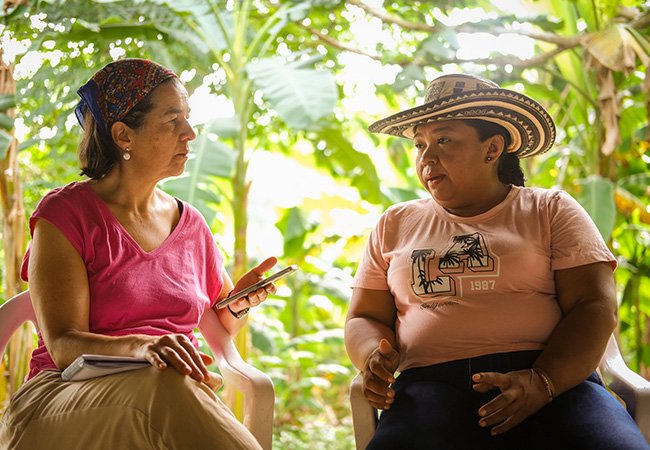
L.P.: How do you think participation in these forums has helped you to take part in self-government, including at the national level?
Y.: Well, this process has been very important because, apart from being a process of research and monitoring of the peace agreements, it is also a process of reclaiming our identity as indigenous communities.
Studying the ethnic chapter as part of the Zenú committee opened doors for many women.
Thanks to everything we’ve seen, and the fact that it’s we who have to speak out, it’s we who have to influence change and ensure more women take on leadership roles – indeed, we now have two female councillors who were trained through this process.
Apart from that, we now have women on our own Court of Justice who have a sense of belonging and who know how to defend women’s rights.
We also have female captains. In the past, women did not dare to speak out, because men always held the upper hand. Today, women dare to give orders.
L.P.: What are the main challenges facing women?
Y.: Well, I think we need to talk about the first challenge, and the first challenge is that we live in a sexist society. Secondly, there are economic issues for women. A third risk would be the issue of threats from armed groups. A fourth is the lack of institutional response.
L.P.: How have Zenú women leaders contributed to peacebuilding?
Y.: Well, Zenú women leaders have contributed to peacebuilding because, ever since we first learnt about the Peace Agreement – specifically the ethnic chapter – we have been raising awareness amongst the key leaders.
We have held meetings in various communities where we have explained how we can contribute to peace, and how, through simple actions — such as refraining from criticising others — we are helping to ensure that peace begins with us.
Apart from that, we have also started to talk about solidarity between women and men.
Because the community had been in a state of discord for three years, with no administration and no representation from the village chief; and thanks to the fact that we, as women, acted as mediators and, drawing on our understanding that we cannot live in conflict, we helped to ease the situation and resolve the conflict.
So, with the little we have, we’re helping to foster dialogues based on solidarity, so that we can understand one another and realise that we are one people and that we can move forward if we come together.
L.P.: Yus, what lessons have you learnt from this partnership we’ve built between the women of the Zenú people and Humanas?
Y.: Before we were part of Humanas, we were like women who were asleep; because, although we had the abilities, we didn’t really dare to act. .
Understanding the Peace
Agreement has enabled
us to claim our rights
and pave the way for
women’s leadership.
Truly, today the experience and expectations we women have are very big and continue to grow.
Since the creation of the coalition, we’ve grown enormously. We’ve created major platforms that we hadn’t been able to establish before. We’ve helped elect mayors – something we’d never done before – councillors, and representatives of the Ombudsman’s Office.
With the tools we’ve been given, we’ve also been able to say: ‘Look, this is how it is; so, let’s work together so that we can move forward, because it benefits you and it benefits us’.
Today we have reached that point of balance where we know how to make requests, where we can build peace without putting ourselves at risk of being suddenly murdered.
So, I do believe this has been a partnership that is bearing fruit and will continue to bear much fruit through this enduring alliance.
LINKS TO ARTICLES
¿Cómo va la implementación de las medidas de género del Acuerdo Final de Paz para las mujeres zenú?
Conocimiento sobre las medidas de género del Acuerdo de Paz en Bahía Solano y Juradó
Crónica del nacimiento del Comité de Seguimiento Étnico Territorial de las mujeres del Pueblo Zenú
Visibiliza el trabajo de las mujeres de El Comité de Seguimiento a la implementación de las medidas de género del Acuerdo de Paz