



ASOCIACIÓN DE MUJERES AQ’AB’AL (ASDEMUAQ)
Medicinal plants are a part of healing, as they allow us to build a life in harmony.
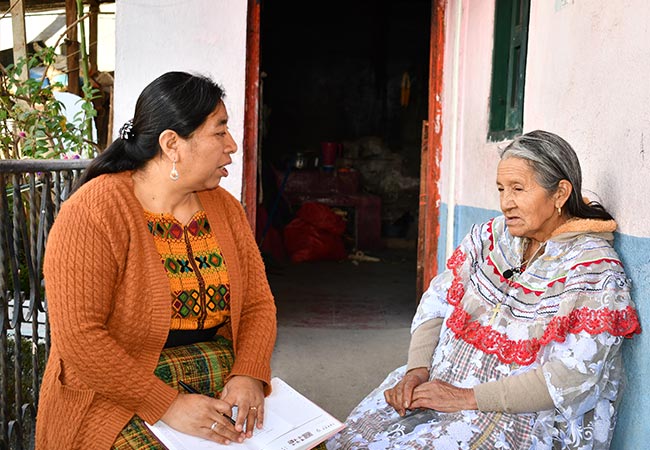
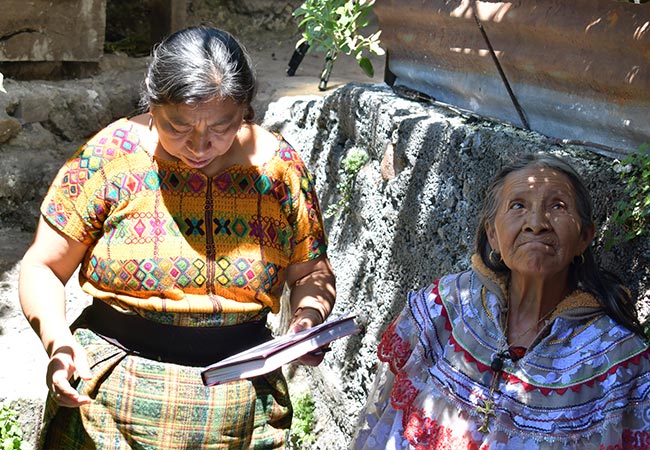
Eulalia Diego Pedro lives in the municipality of Santa Eulalia, Huehuetenango, Cristo Rey canton. She was born on 28 March, 1950. At 75 years of age, she has seven children, two sons and five daughters, who are now adults, and one deceased child. They live in different parts of Guatemala. Eulalia tells us about her experience of participating in the healing processes.
Aq’ab’al: What has your life experience been like?
Eulalia Diego Pedro: I have a long story, and it may not end today because I left my country, Guatemala. I went to live in Ixcan Playa Grande Quiche for 12 years. Because of the armed conflict, I fled to a refuge in Mexico. When I was living in Ixcan, I didn’t worry about anything. I just took care of my house, my home and my chores. But down in the mountains, because of the conflict, I learned a little. I started working, and they chose me as coordinator among thousands of women. But there, I was scared. I was afraid when they told me to come and talk. I would hide from the people because there were so many of them. But in the end, some of my colleagues would say, ‘Come on, Doña Eulalia’. Little by little, the fear, shyness, fright and embarrassment went away, in addition, when you are with your husband, you are going to say: ‘you victimise us’. When I arrived in Mexico, I thought I was going to rest, that I was free, that there was nothing there, but there is more work there. I rested for about two years and was chosen as coordinator of the return process. I learned everything there. I have no education, I have only picked up a few words, but thank God I have managed to learn. They told me I had to go to meetings with the government, the president, the governor and ambassadors. They treated us very badly as indigenous people, but thanks to the people who guided us, I was encouraged to participate and speak up. There are bad memories and good memories. I did the work and we achieved our goal. That’s why I have my family. My husband was still with me. He complained about the work I was doing. I had to stand up to him because he didn’t want me to do it. He scolded me, but I made the effort and my children supported me.
Aq’ab’al: What do you wish for women?
EDP: I see myself because I was a victim of violence, so when I arrived here in my community, I saw women who were very quiet, very shy. They are victims of violence, of abuse, they don’t complain. That’s why I thought, can’t I support these women? We talked to some of them because they saw that I had a lot of problems, many of them ask me: how were you able to overcome all those problems? Through the support of other women or some organisations. But you are not used to it, but you have to talk about it. You have to discuss it to see how we can help. You shouldn’t fight with your husbands either. Sometimes, when you talk, they understand, and little by little things get sorted out.
“When I healed traumas from
violencie I experienced 25 years,
it motivated me to accompany
and heal other women
who experience violence.”
Some come to look for me at home to see what to do, those who have problems. I have accompanied women and girls because there are parents who tell their children, ‘Go away, I don’t want to see you’. So where do the children go? Sometimes they come to me, but they ask me, ‘What if they put you in prison?’ Why, am I stealing their children? I joined the meetings of the Public Ministry’s Referral Network and there I learned a little about the laws, so now I can take the women there. That’s how I started my work. I want women to not be victims of their husbands because there are laws that can defend us, but when you don’t know about them… And the worst thing is that the men threaten you: ‘If you report me, I’ll kill you’. That’s how it was for me.
Aq’ab’al: How did the healing process help you?
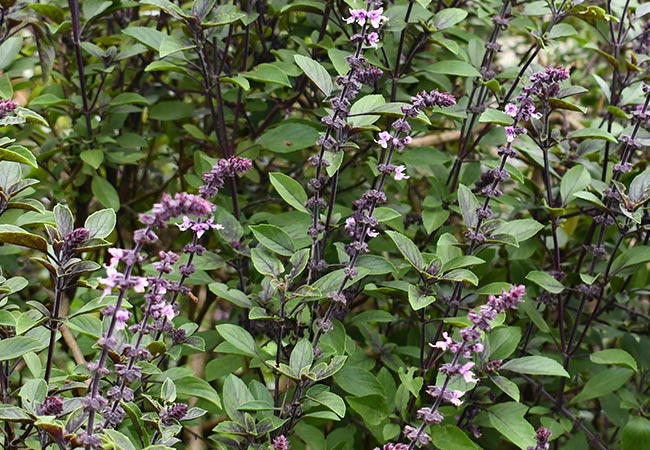
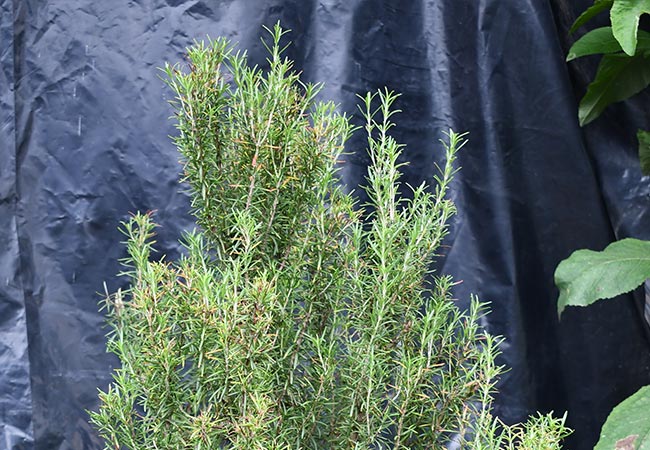
EDP: The healing process has given me a lot of support from the beginning. When I was little, my late parents and grandmother told me that medicinal plants heal us. Before, there were no doctors or pharmacies, because with so much violence and abuse… where I lived, plants helped me a lot. Thanks to the Aq’ab’al women’s organization, which supported me when I felt pain, shame, fear, turmoil and headaches, and couldn’t find a way to heal myself, I joined the Aq’ab’al women’s organisation. There they taught us how to use medicinal plants more effectively. For example, rue for headaches and sadness. Not only rue, but also exercises, breathing and massage. Rue is relaxing. You rub it from your head to your feet. I’ve used it when my arms hurt, my body hurts, my knee hurts, everything hurts. Anyway, I used it.
MAYAN WOMEN AND HEALING
For the Mayan people, healing is the connection and communication with Mother Earth, who saw us born, feeds us and gives us a healthy life. Mayan women take care of Mother Earth. Before, there were no doctors, babies were born on the ground. That is where the connection with Mother Earth begins.
For Mayan women, healing is
the connection with
Mother Earth and her elements.
Our grandparents tell us that when they felt anxious, sad or worried, they would seek out the mountains, trees, rivers, the cries of birds, jaguars, weasels and many other animals. When they returned home, they brought joy with them because they had eliminated those emotions.
It is important to continue the healing processes. From the Aq’ab’al Women’s Association, thank you for the support of Fokus. As Doña Eulalia says: “We continue to stand because WOMEN’S STRUGGLE NEVER ENDS.”