



CORPORACIÓN DE APOYO A COMUNIDADES POPULARES (CODACOP)
Photo: Juliana Echeverry, CODACOP
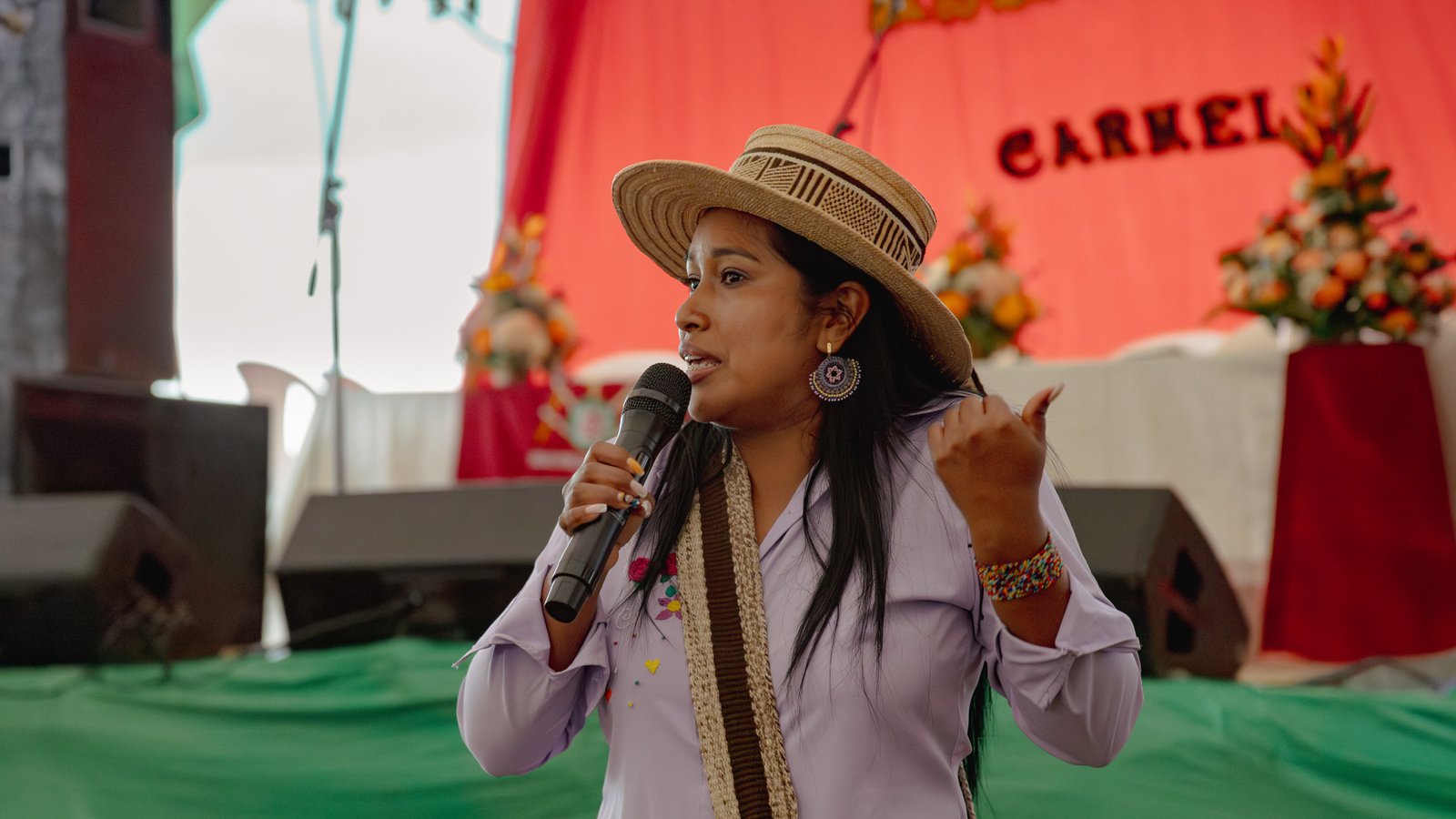
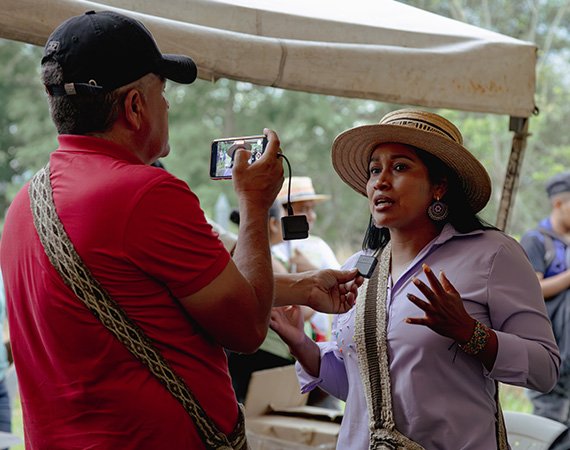
Yohana Conda’s life has been marked by violence and loss. Today, she is a community leader who supports other women and defends their rights.
Yohana Conda Fernández, aged 36, is the coordinator of the Women’s Network at Çxhab Wala Kiwe. She is an indigenous Nasa woman, born in Jambaló, Cauca, and the mother of three children. Whilst her story is marked by violence, it is also characterised by a constant desire to transform pain into resistance and care for people and Mother Earth.
Yohana grew up in a family of ten siblings. Her mother had various jobs to support the household, one of which was a small stall where she sold empanadas and potatoes. When she was unable to run it, her children took charge of the business.
It was there that an experience began which would shape her life.
“We know that if
I’m fighting against
the violation of a right,
it’s because there’s someone
violating it, and of course
that person isn’t going to
like what I’m doing at all.”
“I was about 11 or 12 years old, and this man became obsessed with me. It was a really difficult time because he wouldn’t even leave me alone at school. “He would send me notes in cigarette packets through the militia right there in the village.”
The man she’s talking about was the commander of an armed group operating in the area. One day, as she was returning from school with some other pupils, he blocked their path.
“He stopped the whole group and said to them: ‘Right, from now on, you carry on your way; she’s staying here.’ That day was a nightmare for me because I thought: ‘Here, either I’ll lose my life or my freedom.”
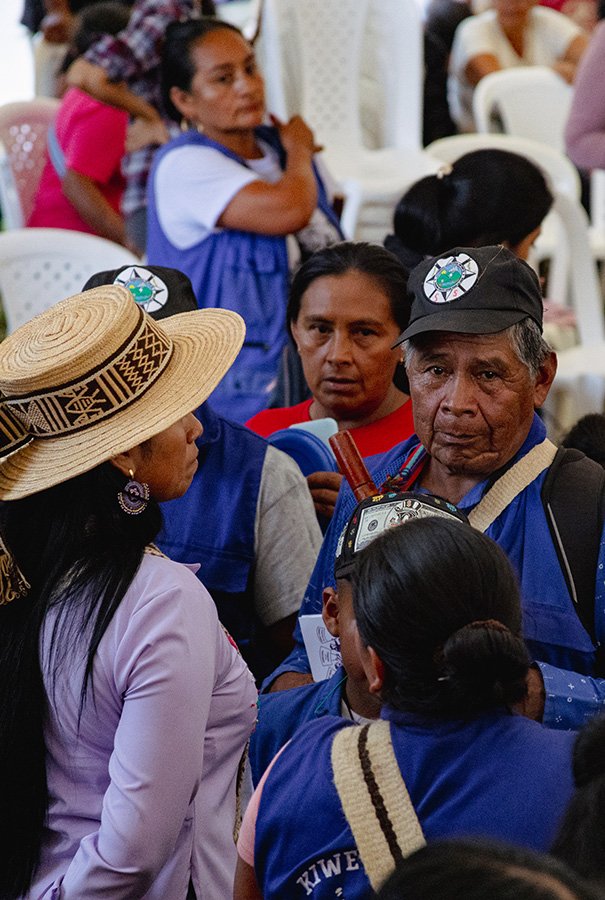
Her classmates alerted the community and that very night Yohana was rescued. Shortly afterwards, she was sent to Popayán under the protection of her brother Milcíades Trochez.
From then on, her life was marked by displacement and fear.
“My brother would take me to school, and I’d have to leave straight away and go home. I was never able to sit on a pavement or say, ‘I’m going to the park for an ice cream’.”
Years later, following the signing of the peace agreements, she returned to Jambaló. There she met the father of her second son. But when her baby was just fifteen days old, her brother Milcíades – who by then was the coordinator of the Indigenous Guard – was murdered.
“It was a really difficult time, because my dad had also been murdered by these same armed groups and now, they’d killed him […]. I always remembered that one of my sisters wanted to avenge my dad’s death and joined an armed group. There, she was sexually abused […] and, of course, that wasn’t the life I wanted.”
Faced with this grief, Yohana made a different choice: to carry on her brother’s legacy of leadership and work for her community.
Along the way, she discovered that defending women’s rights was not just a political task, but also a cause deeply linked to her own personal history.
“I experienced sexual violence, not only at the hands of armed groups, but also at the hands of people very close to the family. So that means I simply cannot turn a blind eye to any situation experienced by a fellow woman who comes to me for help.”
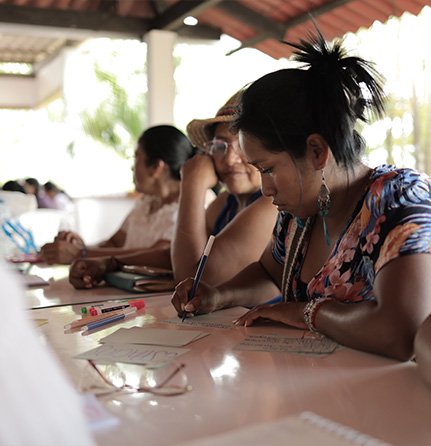
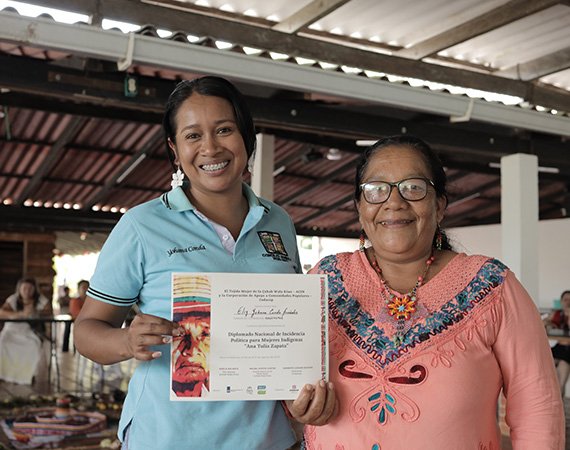
Over the years, Yohana has strengthened her community leadership. She served as a councillor for the municipality of Jambaló and today she coordinates the Tejido Mujer network within Çxhab Wala Kiwe. There she supports initiatives to prevent violence and defend women’s rights.
This commitment entails many risks for her.
“We know that if I am fighting against the violation of a right, it is because there is someone violating it, and of course that person is not going to like what I am doing at all.”
Even so, she carries on.
“I’m aware that I’m a thorn in the side of many people. Many nights, as I’m walking home, I find myself in tears because I know my family is also aware of the risk. My mum is one of those who suffers the most because she’s already lost a son for being in a leadership role.
But the path I’ve chosen is one where it’s the community itself that entrusts me with this role.
How long will this go on? I don’t know. Until the sun dies.”