



Three generations of Maya women — Nicolasa, Jacinta and Lidia — faced violence and trauma. Through the Kaqla processes, they found holistic healing, regaining their strength, memory and collective hope.
Mrs. Nicolasa Raymundo is now 68 years old. She was born in 1956, amidst the cold and mist of the Ak’ul village of Nebaj, in Quiché. The eldest of five sisters, she grew up amongst rivers, trees and animals, in a family devoted to farming. During the 1980s, the harshest period of Guatemala’s internal armed conflict—particularly in the Mayan communities of Quiché—her life changed forever. She was forced to flee and take refuge in the mountains, enduring seven years of persecution, hunger and fear. Her family was torn apart. She lost her home, land and livestock. During those years, she experienced moments of grief, loneliness and profound physical trauma. Her story remained buried in silence until she found a safe space to speak out. Decades later, as part of a healing process, she was able to say for the first time: “Ever since the army raped me, my body has been numb.”
In 1987, 31 years later, in San Pedro La Laguna, on the shores of the most beautiful lake in the world, Mrs. Jacinta Quiacain was born. She lost her mother at a young age and her father turned to alcohol. At the age of 15, in 2002, she moved to the capital to work as a domestic worker. In the home of an upper-middle-class family, she was forced to take off her Tzutujil dress and wear a maid’s uniform. It was there that she experienced one of the most painful episodes of her life: her employer attempted to sexually abuse her until he succeeded. She fled. Later, at the age of 20 and pregnant, she returned to her village seeking support to raise her daughter. She raised her child as a single mother, with the help of some of her aunts, but felt that “her body was empty”.
Her daughter Lidia grew up with her mother and aunts. Thanks to Jacinta’s efforts, she was able to access formal education. When she reached puberty and began menstruating, she started suffering severe pain and went to a health centre. There, the doctor who attended to her tried to abuse her. He did not succeed, but he left deep scars: fear, insomnia and an absolute dependence on her mother. Lidia never left Jacinta’s side. For her, her mother was her only safe place.
Pain can be transformed
into collective strength,
and when memory is healed,
it becomes the seed
of a dignified life.
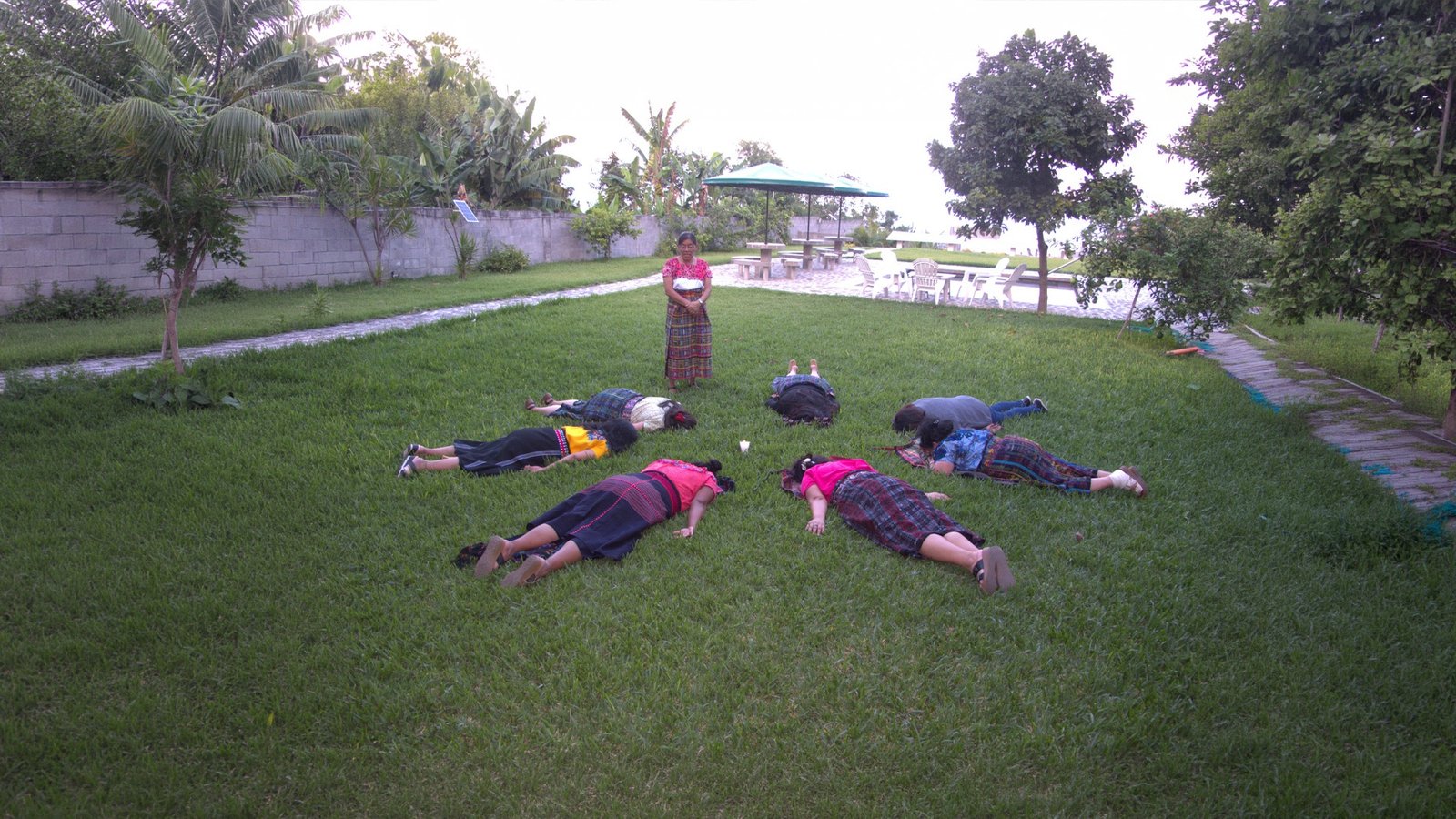
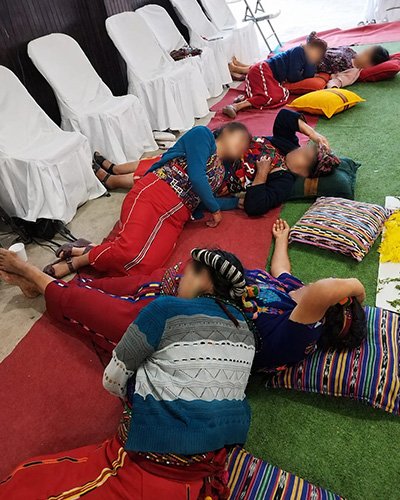
In 2024, Kaqla Maya Women began a collective healing process with a group of women aged between 16 and 75: some were already grandmothers, others mothers, and others daughters. Mrs. Nicolasa, Jacinta and Lidia joined this process. At the start, they worked through emotions such as fear, sadness, pain and hatred. In the third workshop, Nicolasa managed to speak clearly and openly about the rape she had suffered: “Ever since the army raped me, my body has been numb.” Other women also shared their experiences during the war: hunger, persecution, bombings and isolation. The trauma of hunger was reawakened during the pandemic and also during the roadblocks of 2023, when the isolation reminded them of the fear of not having access to food. Little by little, they delved deeper until they reached the root of the trauma.
Jacinta shared that, although she did not consciously experience the internal armed conflict, she too was a victim of sexual violence, and her daughter faced an attempted assault. Lidia took part in two workshops but did not continue because she found a job; after these workshops, she no longer needed her mother’s constant company. “I felt I had the ability and strength to be on my own and I was no longer afraid.” Three generations, three stories intertwined by sexual violence, but also by healing. Mrs. Nicolasa, Jacinta and Lidia show that pain does not remain confined to a single life: it is passed on, it is inherited, but it can also be transformed.
How many women have been through the same thing! Those who take part in these processes bring the issue to light and pave the way for our communities to continue healing the historical fabric of sexual violence. Kaqla is committed to healing because “when we heal, we do not forget, but when we recall the event, we no longer experience the emotions we felt at the time of the trauma. As well as healing the emotions that affect us, we also heal our beliefs”.
Kaqla’s healing processes address the four dimensions of the human being: spiritual, emotional, physical and mental. This achieves holistic healing, which not only addresses current emotions but also reaches the root of the trauma. “It is necessary to get to the root trauma that lies behind those emotions.”
Healing is energy; it vibrates and travels. It does not remain confined to them alone; it expands to their families, to future generations, to the country and to the planet. Mrs. Nicolasa, Jacinta and Lidia are examples of how pain can be transformed into collective strength, and of how memory, when healed, becomes a seed of a dignified life for communities.