



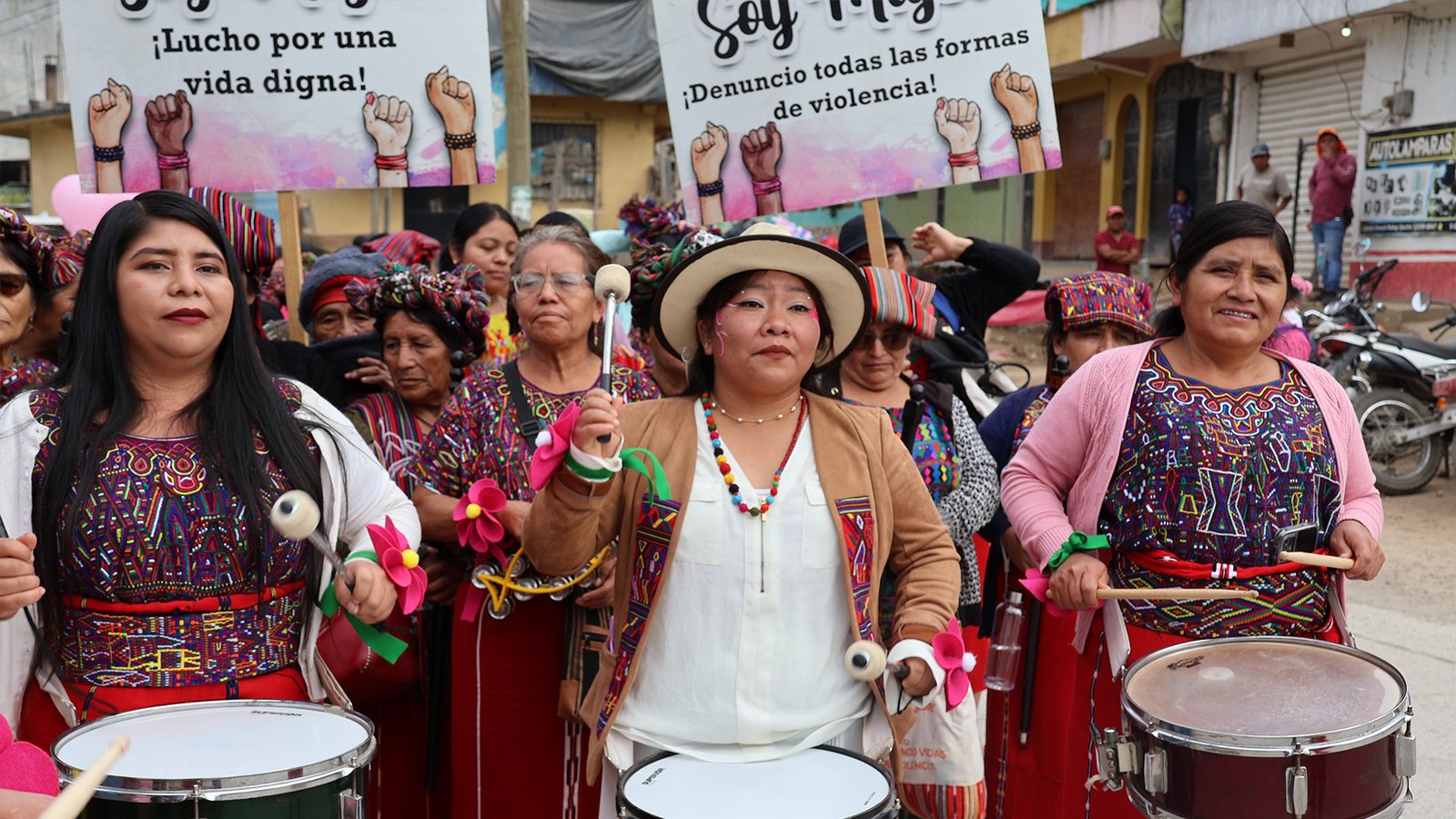
ASOCIACIÓN RED DE ORGANIZACIONES DE MUJERES IXHILES (ASOREMI)
In Nebaj, discrimination, structural inequality, gender stereotypes and violence against women are rife, reflected in the prevalence of machismo, which prevents women from participating in decision-making forums.
In Santa María Nebaj (Quiché), official demographic data indicate a total population of 72,686 inhabitants, according to official figures published by the National Institute of Statistics (INE) in 2018. The majority of the population are women, numbering 38,689 (53%), whilst the male population stands at 33,997 (47%). Although women make up the majority of the population, few hold decision-making positions, due to the prevalence of machismo, which manifests itself in discrimination, structural inequality, gender stereotypes and violence against women.
Human rights encompass the right to live free from violence and discrimination; to enjoy healthcare, education, decent work and political participation; and to ensure equality and dignity in the face of historical inequalities. The continuum of violence against women has existed since the colonisation of this country. The fight against gender-based violence has been one of Asoremi’s objectives since its inception.
We reject the fact that women have no say in household decisions, in community roles or in decision-making forums, as their participation has been limited by the persistence of sexist customs that hinder women’s involvement in the various communities within the municipality of Nebaj. Furthermore, there are specific barriers to access justice linked to distance, travel costs, the availability of transport and the limited institutional presence of the government. For this reason, coordination with local leaders and community networks is essential to prevent, detect and support women in their struggle.
Currently, there are two female councillors in the municipal government who have been used politically to give the appearance of women’s participation in decision-making bodies, but they are sidelined in other committees. A few months ago, the lead councillor stepped down, and the former deputy councillor was promoted to substitute councillor. She was brought in because she is a well-known woman supported by her community, and for them this guarantees votes in their favour in their next political campaign. However, neither woman has been invited to the monthly meetings. They have been unable to influence decisions or coordinate on women’s needs: health, education and the prevention of violence. Within the Comude (Municipal Development Council), they have been restricted in their ability to put forward proposals on violence prevention policies, advocacy policies and coordination with civil society.
“Asoremi has successfully
raised awareness
among victims, who
have recognised the type
of violence they suffer
and have come forward
to report it in order to heal.”
The Municipal Directorate for Women (DMM), responsible for promoting gender equality and the empowerment of women, has not been granted the autonomy to draw up budgets and coordinate activities with civil society, which has become an obstacle to the development and overall well-being of socially vulnerable women. Through its community roundtables, Asoremi has succeeded in strengthening the capacity of local authorities on issues relating to human rights and ‘new masculinities’ – practices and attitudes that promote gender equality and the rejection of traditional stereotypes. Of the seven community forums in which Asoremi has established a presence, it has managed to influence six. There are now women leaders involved in the prevention of violence against women, who also raise awareness within their communities, thereby strengthening the assertion of human rights that have previously been disregarded.
Asoremi has succeeded in raising awareness amongst victims who have recognised the type of violence they are suffering and have come forward to report it, in order to heal and bridge the gap that hinders their participation in decision-making. Workshops have been held with various groups of women assessed and identified by the Asoremi system, who have suffered violence against women at the hands of family members or others. Human rights advocates have been trained and empowered, and they have spoken out at public events to champion women’s rights, describing how they have been treated by the justice and health authorities.
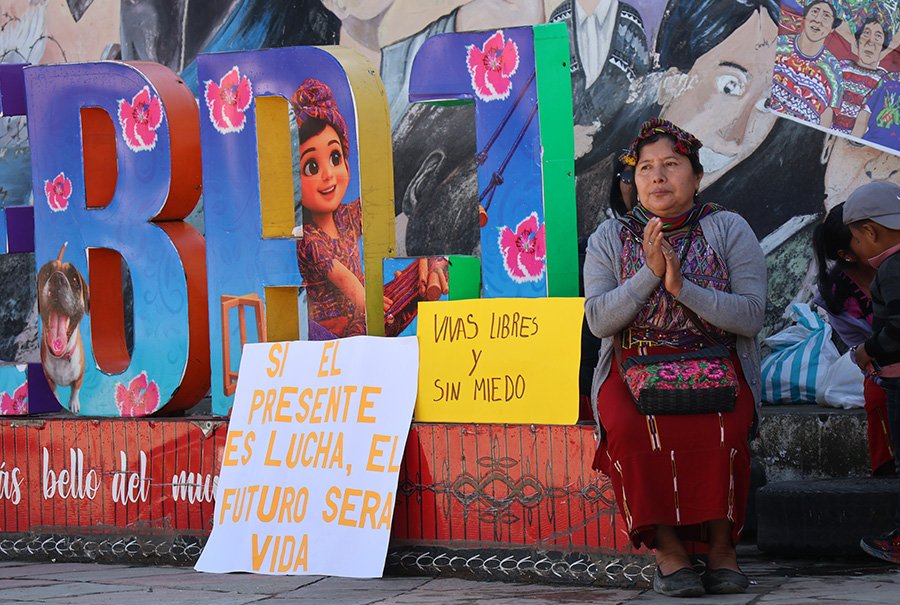
We have demanded, and continue to demand, that the government and its various bodies responsible for safeguarding women’s political rights implement public policies to ensure that women are aware of their rights, are valued and are taken into account. They must not be violated or subjected to violence when seeking justice, as was the case with our founder, Juana Ramírez Santiago, a leader who was committed to demanding the fulfilment of women’s rights in various spheres, even though she encountered the obstacle of structural violence seeking to hinder her work along the way. She, like other women fighting for a place at the decision-making table, found support networks along the way that enabled her to exercise her leadership.