



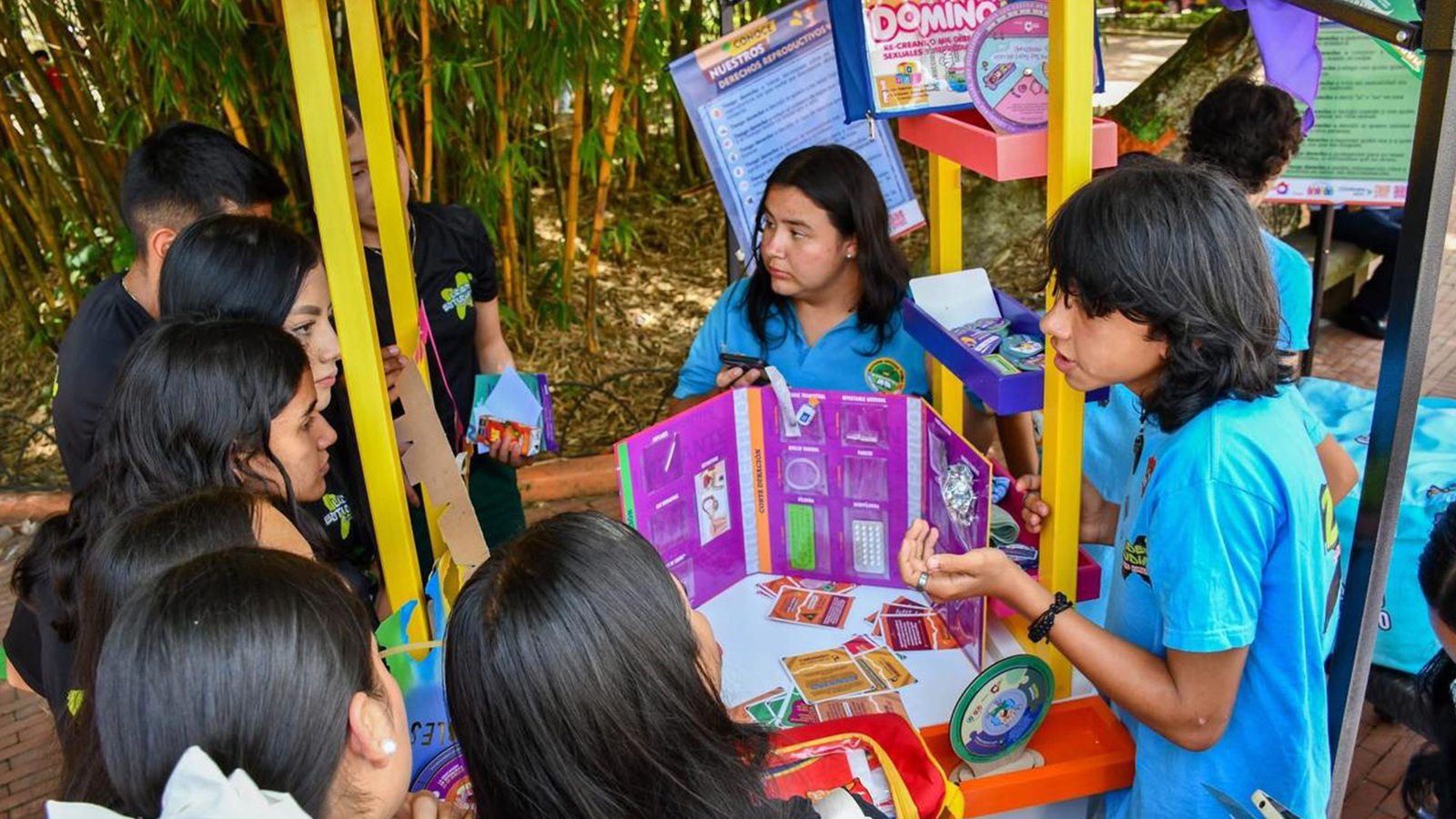
For women, girls and pregnant people, making decisions about their own bodies depends more on the local context than on the law.
In Colombia, geography dictates the fate of bodies. Whilst the High Courts hand down landmark rulings on sexual and reproductive rights (SRRs), a mighty river, a militarised trail or a village bell tower can completely override them. By comparing the autonomy of decision-making regarding our bodies across three territories – the tense border region of Arauca, the ‘isolated’ Pacific coast of Chocó and the deeply rooted conservatism of Boyacá – at the Fundación Oriéntame we began to listen to what these territories were crying out. The communities taught us that autonomy is not decreed, it is lived.
To transform perceptions,
we must challenge
the moral imperative
and promote socio-cultural
and territorial shared
responsibility.
In Arauca, a territory fractured by armed conflict and the absence of state authority, talking about one’s own body is an act of survival. There, the institutional barrier was fear. In the workshops, the silence was broken as women laid bare the stigmas they bore alone. “They told us that if we asked for contraceptives, we were ‘restless girls’,” as one female leader in Arauquita put it. There was also the paralysing terror that making a decision would mean divine condemnation. When we opened up spaces for dialogue, the aim was to reclaim the right to decide for ourselves, about our own bodies. The impact was not confined to a report; it resonated in people’s voices, as a young woman from the Makaguan El Vigía reserve put it: “We learnt that saying NO is also a right.” That ‘no’ drew a sovereign boundary. The fact that the hospital in Tame opened its doors to voluntary termination of pregnancy (VTP) showed that the institution only acts when communities lose their fear of demanding change.
Whilst Arauca defends the body in the midst of conflict, Chocó defends it against state neglect. In municipalities with Afro-Colombian and Indigenous populations such as Bahía Solano or Nuquí, where the state reaches people by boat, the theory of comprehensive sexuality education (CSE) collided with an open wound: the commercial sexual exploitation of children linked to tourism. How do you teach autonomy in a place where the market puts a price on childhood? The answer sprang from the Emberá Dobidá women leaders and the community kitchens. The community translated these teachings into a swing with wooden wings in El Valle, carved with the phrase: “Teach me to fly without mistreating my wings”. The process became an emotional refuge. Defying male suspicion, an indigenous woman leader summed it up with devastating clarity: “I don’t want them to become mothers so young because they don’t know how to look after children, and there are other plans.” They realised that the CSE is not just a piece of paper; it is a shield for children, adolescents and young people as they pursue their life plans.
As one ascends the mountains of Boyacá, the nature of the threat changes: it is no longer gunpowder or the tide, but the thick mist of moral imperatives. In municipalities with rural roots and deep religious traditions, such as Chiquinquirá, the barrier is a vague conscientious objection that translates into a labyrinth of polite bureaucratic delays. No one outright denies the right to a safe abortion, but they let time slip by until the woman gives up or travels to another area. To challenge a conservatism entrenched in guilt, a leaflet was not enough; it was necessary to take it to a public space. So, we let the walls speak. We painted murals in the heart of the villages; strokes of vivid colours depicting women in control of their own destinies and rural hands preventing gender-based violence. The mural acted as an uncomfortable mirror. When rural communities walk through their own territory past a wall that enshrines the freedom to choose, the moral monolith cracks. This cultural upheaval prompted local authorities to sign a public pact in support of the right to sexual and reproductive health.
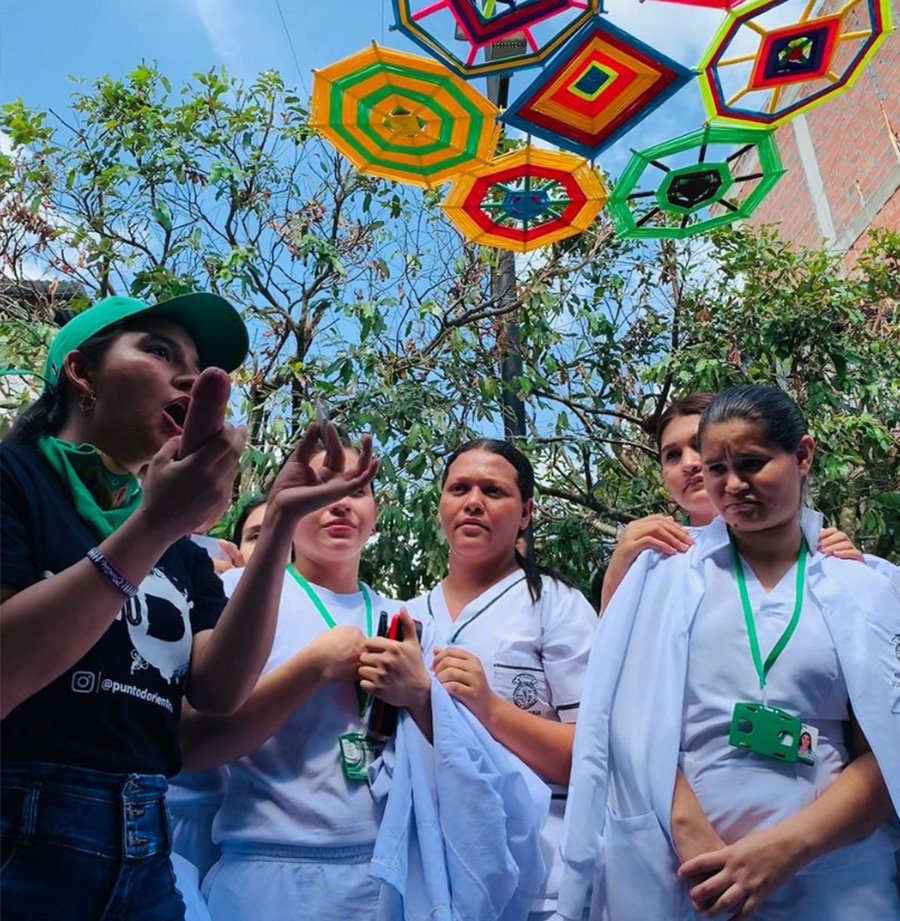
What unites the female leader from Makaguan, the young woman from the Pacific coast and the peasant woman from Boyacá? The certainty that projects come to an end, but the network remains. When asked what truly transformed this process, they speak of a point of no return in their life stories. “We often grew up thinking that talking about these issues was wrong. Today we understand that supporting others is also a form of care,” said a female leader from Sogamoso in Boyacá. Therein lies the key comparative insight: faced with a uniform national law that loses its impact at the local level, the women countered it with tailor-made empathy. They became the lifeline that the hospital denied; they are the living resistance of the territories that are pleading for their rights to be guaranteed.
Guided by the knowledge gained over these years, we are now extending our reach to La Guajira. We are certain that autonomy over our bodies is not a gift sent by post from Bogotá. It is a collective achievement sustained by raising a paintbrush in Boyacá, weaving change in Arauca and spreading our wings and forging new paths in Chocó. As we were told in every region, it is we who will keep the dialogue and the demand for our rights alive. There is much work to be done to ensure that the guarantee of our rights and autonomy becomes a reality.